UAC Water Damage Team
New Port Richey, FL 34652We help homeowners dry wet structures quickly and remediate mold when growth has already started. Call (727) 569-5246 anytime.
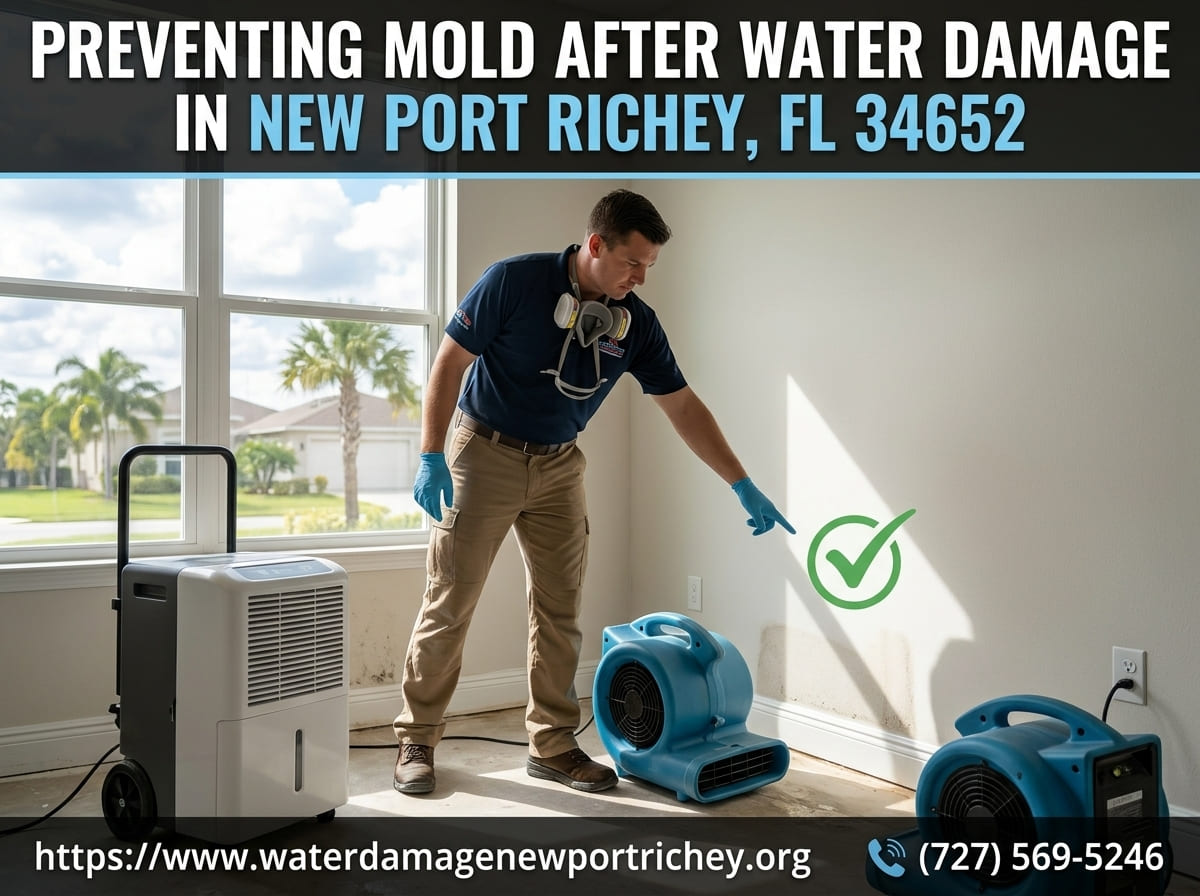
Mold is not a mystery in New Port Richey. It is a moisture problem that finds food in drywall paper, dust, wood, and carpet fibers. After a leak, appliance failure, or indoor flooding, preventing mold is less about harsh sprays and more about how quickly and completely you dry the building. In zip 34652, outdoor humidity often sits high, so indoor wet materials do not get a free pass just because the puddle disappeared.
This article explains why mold follows water damage, what you can do in the first days, and when professional mold remediation becomes necessary. If you already smell mustiness or see discoloration, call (727) 569-5246 for help from UAC Water Damage New Port Richey.

"Mold prevention starts with moisture control. If the walls stay wet, the cleaning products will not outrun Florida humidity."
Warm temperatures speed biological growth. High humidity keeps building assemblies from drying by themselves. Many local homes also have slab foundations, limited attic ventilation in older stock, and HVAC systems that can circulate spores if damp filters and coils are ignored after a loss. Add wet insulation or a soaked closet full of clothing, and you have ideal conditions for growth within a day or two.
Hidden moisture is the real enemy. Water travels under vinyl plank, behind kick plates, and into wall cavities. Floors can look dry while the subfloor or underlayment remains wet. That is why water damage restoration that includes moisture mapping is the foundation of mold prevention, not a separate luxury.
Industry experience and field conditions both point to a short window. Materials that stay damp for more than about 24 to 48 hours are at elevated risk. Your job after a loss is to shrink that wet period. Start with safety and source control as described in our guide on what to do in the first 24 hours, then move into structured drying.
Extraction comes first. Dehumidifiers pull moisture from the air so materials can release water. Air movers create evaporation across wet surfaces. Closing a wet room without humidity control often creates a muggy box where mold thrives. Opening windows helps only when outdoor air is drier than indoor air, which is not always true in Pasco County afternoons.
Keep furniture off wet carpet. Pull wet contents into dry rooms. Discard carpet pad that remains saturated or contaminated. Cut out drywall that has been wet long enough to soften or stain through, especially when the cavity insulation is soaked. Trying to save everything often means saving mold food.
Wiping a stain on a dry, solid surface is not the same as remediating colonized drywall. Painting over damp spots traps moisture and odors. Spraying bleach on porous materials does not reach roots of growth inside the paper and gypsum. Effective mold remediation uses containment, controlled removal, HEPA filtration when appropriate, and verification that the moisture source is gone.
If the water came from outdoor flooding or sewage, treat the event as a contamination issue first. That path overlaps with flood restoration and often requires removing porous materials that cannot be sanitized. Skipping that step and only drying can leave harmful residues and odor behind.
Once the loss is dry, keep everyday humidity in check. Maintain your air conditioning, replace dirty filters, and address slow leaks under sinks and around tubs before they quietly wet the same cabinets again. Condensation on supply vents or cold spots can also feed mold if rooms stay closed and humid.
Attics and crawl spaces (where present) deserve a look after roof leaks or storms. Wet insulation and wood decking can grow mold out of sight while living spaces smell only slightly off. Storm season makes this worse. Pair this article with our hurricane season flood prep checklist so rain events do not become mold events.
Look for musty odor that returns after cleaning, fuzzy or powdery growth on walls or baseboards, recurring stains, and allergy-like symptoms that improve when you leave the house. Do not disturb large areas of growth without protection. Spreading spores through the HVAC system makes the cleanup harder.
For active water still entering the home, start with emergency water damage response. For settled growth after a past leak, schedule remediation and confirm drying is complete before rebuild. UAC Water Damage New Port Richey handles both sides of that sequence for properties in New Port Richey, FL 34652.
How soon can mold grow after water damage in New Port Richey?
Often within about 24 to 48 hours on damp porous materials in this climate.
Does bleach stop mold after a flood?
Not reliably on porous materials. Moisture removal and proper remediation matter more.
When should I call for mold remediation in zip 34652?
If you see growth, smell persistent mustiness, or waited too long to dry. Call (727) 569-5246.
Can I prevent mold by running fans only?
Usually no. Extraction, dehumidification, and moisture checks work together.
We help homeowners dry wet structures quickly and remediate mold when growth has already started. Call (727) 569-5246 anytime.
Smell mustiness or see wet walls? Call for drying and mold help in New Port Richey, FL 34652.
(727) 569-5246
Water damage does not wait. Call our New Port Richey, FL 34652 emergency line anytime.
Call (727) 569-5246Copyright 2026 UAC Water Damage New Port Richey. Serving New Port Richey, FL 34652. All Rights Reserved.